Section 179 Tax Deduction: How to Save Big on Equipment Purchases
Learn how Section 179 can help your business deduct the full cost of qualifying equipment. Maximize your tax savings with equipment financing.

Section 179 is easily one of the most effective tools for reducing tax liability, yet we constantly see Dallas business owners leave money on the table because they don’t know the specific rules.
This provision isn’t just a deduction. It is a government incentive designed to make buying equipment cheaper for you right now.
Usually, when you buy a major asset, you have to write it off slowly over several years. Section 179 changes that math entirely.
It allows you to deduct the full purchase price of qualifying equipment in the single year you buy it.
When you combine this with the right equipment financing, the results can be game-changing for your cash flow.
We have helped countless local businesses structure these deals to maximize their savings.
Let’s break down exactly how the numbers work for 2026, the specific equipment that qualifies, and the strategy we use to help clients essentially get the government to pay for a portion of their upgrades.
What Is Section 179?
Section 179 of the IRS tax code allows businesses to deduct the full purchase price of qualifying equipment and software purchased or financed during the tax year.
Instead of writing off a $50,000 machine over five to seven years through standard depreciation, you take the entire $50,000 deduction off your gross income immediately.
This deduction was essentially created to motivate businesses to invest in themselves.
The government knows that when businesses buy equipment, the economy grows. Section 179 is the carrot that makes those investments feasible for small and medium-sized businesses.
2026 Section 179 Limits
The limits are adjusted annually for inflation. For the 2026 tax year, the numbers have increased from previous years:
- Maximum Deduction: $1,250,000 (The total amount you can write off).
- Spending Cap: $3,130,000 (The total amount of equipment purchased).
- Bonus Depreciation: 20% (This has phased down significantly from previous years).
It is vital to watch that spending cap.
Once your total equipment purchases for the year exceed $3.13 million, the Section 179 deduction reduces on a dollar-for-dollar basis. This clearly signals that Section 179 is a benefit targeted specifically at small and medium businesses, not major corporations.

What Equipment Qualifies for Section 179?
Most tangible goods used by American businesses qualify, but there are specific distinctions you need to know.
To qualify, the equipment must be tangible, purchased (not leased under certain terms), and used more than 50% for business.
Tangible Equipment & Machinery
We see these items deducted most frequently by our clients in construction and manufacturing:
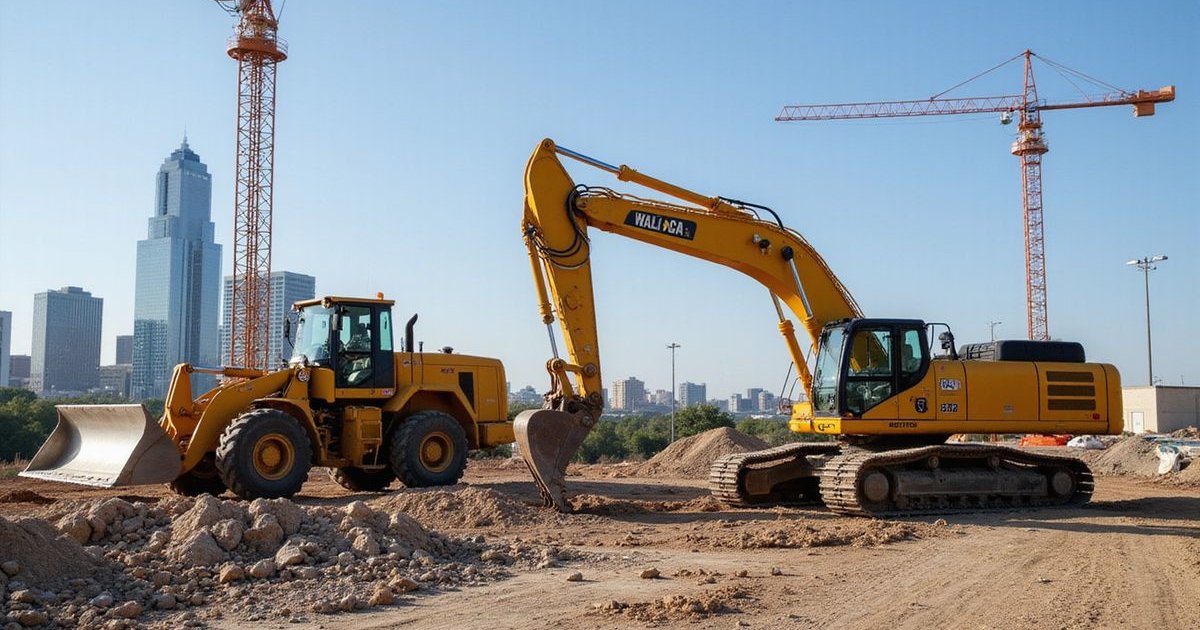
- Heavy machinery (excavators, bulldozers, forklifts).
- Manufacturing lines and CNC machines.
- Printing presses.
- Office furniture and fixtures.
- Signs and testing equipment.
Business Vehicles (The “Hummer” Loophole)
Vehicles are the most confusing part of Section 179 because the IRS distinguishes strictly between “passenger” and “non-passenger” vehicles.
| Vehicle Type | Deduction Limit | Qualification Criteria |
|---|---|---|
| Heavy Work Vehicles | 100% of Cost | Gross Vehicle Weight Rating (GVWR) over 6,000 lbs. Must have 6ft cargo bed or no seating behind driver. |
| Heavy SUVs | Capped (~$30,000*) | GVWR between 6,000 and 14,000 lbs. |
| Passenger Cars | Lower Limit | Typical sedans or light trucks under 6,000 lbs. |
Note: The heavy SUV limit is indexed for inflation and typically lands around $30,000 plus bonus depreciation.
Off-the-Shelf Software
Software qualifies, but it must be available to the general public.
- It must be subject to a non-exclusive license.
- It cannot be custom-written code exclusive to your business.
- It must be income-producing (used for business operations, not games).
Qualified Improvement Property (QIP)
You can also deduct improvements made to the interior of non-residential buildings.
- Fire suppression systems.
- Security systems.
- HVAC systems and roofing.
- Interior renovations (excluding elevators or structural enlargements).
What Doesn’t Qualify
- Real estate (land and buildings).
- Inventory intended for resale.
- Equipment purchased from a relative or another business you control.
- Property used outside the United States.
How Section 179 Works with Equipment Financing
This is where the strategy gets interesting.
You can deduct the full purchase price of the equipment even if you are paying for it over time through a loan.
The “Positive Cash Flow” Arbitrage
This creates a unique scenario where your tax savings in the first year can actually exceed your total loan payments for that same year.
Example Calculation: Let’s assume you finance a $100,000 piece of machinery for your Dallas construction firm.
Scenario A: Standard Depreciation
- You finance $100,000.
- You write off ~$14,000 in Year 1.
- Result: Minimal immediate tax relief.
Scenario B: Section 179 Deduction
- You finance $100,000.
- You write off the full $100,000 in Year 1.
- Assuming a 35% tax bracket, you save $35,000 in cash taxes.
If your loan payments for that first year total $25,000, you are theoretically cash-positive by $10,000 in the first year simply by buying equipment your business needed anyway.
Real-World Medical Practice Example
Consider a local Dallas clinic investing in new imaging technology.
- Equipment Cost: $200,000.
- Financing Term: 60 months.
- Approximate Year 1 Payments: $45,000.
- Section 179 Tax Savings (35% bracket): $70,000.
In this case, the tax savings ($70,000) completely cover the first year of payments ($45,000) and leave an additional $25,000 in the bank.

Section 179 Requirements and Rules
While the benefits are generous, the IRS compliance rules are strict.
The “Placed in Service” Rule
This is the most common mistake we see business owners make.
To take the deduction for the 2026 tax year, you cannot just buy the equipment by December 31st. It must be delivered, installed, and ready for use by midnight on December 31st.
If a machine is sitting in a crate or a truck is still at the dealership waiting for a custom bed, it does not qualify until the following year.
The Business Use Requirement
The equipment must be used more than 50% for business purposes.
If you buy a truck and use it 60% for business and 40% for personal trips, you can only deduct 60% of the cost.
Purchase vs. Lease Structure
Not all financing agreements qualify.
- Loans/Equipment Finance Agreements (EFAs): Generally qualify.
- Capital Leases ($1 Buyout): Generally qualify because you are viewed as the owner.
- Operating Leases (FMV Buyout): Generally do not qualify for Section 179. However, the lease payments themselves can usually be written off as a business expense.
Strategies to Maximize Section 179 Benefits
1. Bundle Costs into the Financing
Many business owners forget that “cost” includes more than just the sticker price.
You can often include freight, shipping, and installation costs in your Section 179 deduction.
When we structure financing, we often look to include these “soft costs” so you can deduct the entire project amount, not just the hardware cost.
2. Monitor Your Net Income
Section 179 cannot create a tax loss.
You can only deduct up to the amount of your taxable business income. If your deduction is $500,000 but your profit is only $300,000, you are capped at $300,000 for the current year.
The remaining $200,000 carries forward to future years, but you lose the immediate cash flow impact.
3. Time Your Purchases for Q4 (With Caution)
Purchasing in the fourth quarter allows you to get a full year’s worth of tax deduction for equipment you have owned for only a few weeks.
However, beware of supply chain delays.
If you order in November and the equipment arrives in January, you lose the deduction for the current tax year entirely.
Section 179 vs. Bonus Depreciation
Bonus Depreciation is a separate provision that often works alongside Section 179, but they are moving in opposite directions.
While Section 179 is stable and indexed for inflation, Bonus Depreciation is phasing out under the Tax Cuts and Jobs Act (TCJA).
Comparison of Benefits
| Feature | Section 179 | Bonus Depreciation (2026) |
|---|---|---|
| Deduction Limit | Capped at $1.25M | No dollar limit |
| Percentage | 100% of cost | 20% of cost |
| Profit Requirement | Limited to business income | Can create a net operating loss |
| Flexibility | Pick and choose specific assets | Applies to all assets in a class |
The “Combo” Strategy
Since Bonus Depreciation has dropped to 20% in 2026, Section 179 is now your primary tool.
The best strategy is to use Section 179 first to cover your most expensive assets up to the $1.25 million limit.
If you exceeded that limit, you would then apply the 20% Bonus Depreciation to the overage.

Common Section 179 Mistakes to Avoid
Mistake 1: Ignoring State Laws
Federal rules don’t always apply locally.
Some states do not conform to federal Section 179 limits and have much lower caps. Always check with your local CPA to ensure you aren’t hit with a surprise state tax bill.
Mistake 2: Buying from Related Parties
The IRS has strict “anti-churning” rules.
You typically cannot claim Section 179 on equipment purchased from parents, siblings, or corporations you significantly control. The transaction must be at “arm’s length.”
Mistake 3: Recapture Penalties
If you sell the equipment or your business use drops below 50% before the end of the asset’s “useful life” (usually 5 years), you have to pay the IRS back.
This is called “recapture.” We advise clients to only use Section 179 for equipment they plan to keep for the long haul.
Section 179 for Dallas Businesses: Industry Examples
We see specific equipment types yield massive savings for our local industries.
Construction & Contracting
- Equipment: Skid steers, dump trucks, scaffolding.
- Impact: A $150,000 loader financed in November can reduce taxable income by the full $150,000, saving roughly $52,500 in taxes (at 35%) while only requiring one or two loan payments before year-end.
Restaurants & Hospitality
- Equipment: Commercial ovens, walk-in coolers, POS systems.
- Impact: Renovating a kitchen with $80,000 in new appliances qualifies. This is crucial for restaurants operating on thin margins where cash flow is king.
Automotive Repair
- Equipment: Hydraulic lifts, diagnostic computers, tire changers.
- Impact: Shops upgrading their lifts can write off the entire modernization project, including installation labor if billed as part of the total asset cost.
Taking Action: Equipment Financing with Section 179
If you are ready to upgrade your operations, the window to act is before the year ends.
Here is a simple checklist to get started:
- Verify Eligibility: Confirm the equipment you need qualifies for the deduction.
- Check Lead Times: Ensure the vendor can deliver and install before December 31.
- Secure Financing: Get your loan or capital lease approved.
- Save Invoices: Keep clean records proving the purchase date and delivery date.
At Equipment Financing Dallas Pros, we specialize in structuring loans that align perfectly with these tax benefits.
We offer financing up to $10 million with terms ranging from 1 to 10 years, ensuring your payments fit your budget while you enjoy the tax break.
Our application process is fast, requiring just minutes to pre-qualify with no impact on your credit score.
Contact us today to discuss how we can help you acquire the equipment you need to grow your Dallas business.
Disclaimer: This article provides general information about Section 179 and is not tax advice. Tax laws change, and the strategies that work best depend on your specific situation. Always consult with a qualified tax professional before making tax-related decisions.
Related Service
Learn about equipment financing →Related Articles

The Complete Guide to Equipment Financing in Dallas (2026)
Everything Dallas business owners need to know about equipment financing: types, requirements, rates, and how to qualify for the best terms.

Equipment Loan vs. Lease: Which Is Right for Your Dallas Business?
Compare equipment loans and leases to determine the best financing option. Learn about ownership, tax benefits, and monthly payments.
Heavy Equipment Financing for Dallas Construction Companies
Financing options for construction equipment in Dallas. Learn about rates, terms, and requirements for excavators, loaders, and more.