Equipment Loan vs. Lease: Which Is Right for Your Dallas Business?
Compare equipment loans and leases to determine the best financing option. Learn about ownership, tax benefits, and monthly payments.

When you run a business in the Dallas-Fort Worth metroplex, managing cash flow is just as critical as landing the next big client. We often see business owners struggle with the choice between buying equipment outright or signing a lease agreement when exploring equipment financing options. This decision impacts not just your monthly budget but also your tax strategy and long-term borrowing power.
At Equipment Financing Dallas Pros, we understand that every dollar counts when you are competing in a market as aggressive as ours. Our goal is to break down the financial mechanics of both options so you can move forward with confidence.
Understanding Equipment Loans
An equipment loan allows you to borrow money to purchase machinery, vehicles, or technology while retaining ownership from day one. You essentially pay off the asset over time while using it to generate revenue immediately.
How Equipment Loans Work
The process is straightforward and mirrors a standard commercial auto loan.
- Collateralization: The equipment itself secures the debt, which often eliminates the need for additional personal collateral.
- Interest Rates: For 2026, we are seeing rates for strong credit profiles range between 7% and 11%.
- UCC-1 Filings: Lenders typically file a UCC-1 financing statement with the Texas Secretary of State to publicly declare their interest in the asset.
- Maintenance: You are 100% responsible for all repairs, insurance, and upkeep.
Equipment Loan Advantages
Immediate Equity Building Every payment you make increases your ownership stake in the asset. This is vital for construction companies in Frisco or Plano that need to show tangible assets on their balance sheet to secure bonding for larger projects.
Full Tax Deductions (Section 179) The tax landscape has shifted in your favor for 2026. Under the current tax code updates, the Section 179 deduction limit has increased to approximately $2.56 million. This allows you to write off the entire purchase price of qualifying equipment up to that limit in the first year.
No Usage Limits Lenders do not impose mileage caps or hour restrictions. If you need to run a bulldozer for double shifts to meet a deadline at a DFW Airport expansion project, you can do so without penalty.
Long-Term Asset Value Quality machinery often retains value better than you might expect. You have the option to sell the equipment or use it as collateral for a working capital loan later.
Understanding Equipment Leases
Leasing is effectively a rental agreement where you pay for the use of the equipment rather than the equipment itself. This option creates flexibility and keeps your cash reserves high for other operational costs like payroll or marketing.
Types of Equipment Leases
Capital Lease ($1 Buyout)
- This structure feels like a loan but is technically a lease.
- You own the equipment for $1 at the end of the term.
- It is ideal for assets you plan to keep for 10+ years.
FMV (Fair Market Value) Lease
- This is a true rental with the lowest monthly payments.
- At the end of the term, you can return the equipment or buy it at its then-current market value.
- Technology companies in Addison often use this to cycle through servers and laptops every three years.
TRAC Lease
- Specific to commercial vehicles and trucks.
- It allows for a predetermined residual value at the end of the lease.
- Local logistics fleets favor this for managing predictable costs on delivery vans.
Equipment Lease Advantages
Cash Flow Protection Leases rarely require a substantial down payment. Instead of dropping $50,000 upfront for a new CNC machine, you might only pay the first and last month’s rent.
Protection Against Obsolescence Medical practices in the University Park area rely on this benefit heavily. Diagnostic imaging technology advances so fast that owning a five-year-old MRI machine can become a liability rather than an asset.
Simplified Budgeting Fixed monthly payments help you forecast expenses accurately. You avoid the surprise of variable interest rates that can affect other types of financing.
Equipment Loan vs. Lease: Direct Comparison
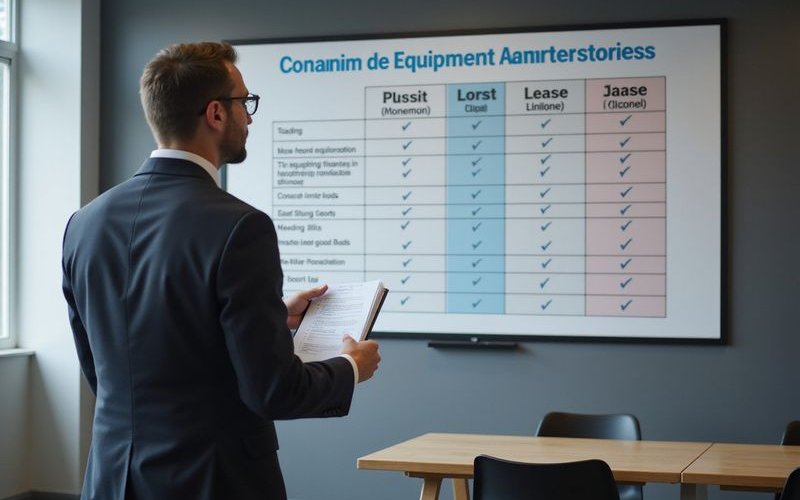
We have compiled the key differences to help you visualize the impact on your business.
| Factor | Equipment Loan | Equipment Lease |
|---|---|---|
| Ownership | Immediate | Lessor owns until buyout |
| Upfront Cost | 10-20% Down Payment | 1-2 Months Advance Rent |
| Monthly Cost | Higher | Lower |
| Tax Filing | You file BPP Rendition | Lessor typically files |
| Balance Sheet | Asset & Liability Listed | Listed (ASC 842 Rule) |
| Depreciation | You claim it | Lessor claims it (usually) |
| Best For | Long-life assets (Cranes, Ovens) | High-tech or short-term use |
When to Choose an Equipment Loan
Loans are the traditional route for a reason. We recommend this path if stability and total cost of ownership are your primary drivers.
1. You Plan to Use the Equipment for 5+ Years
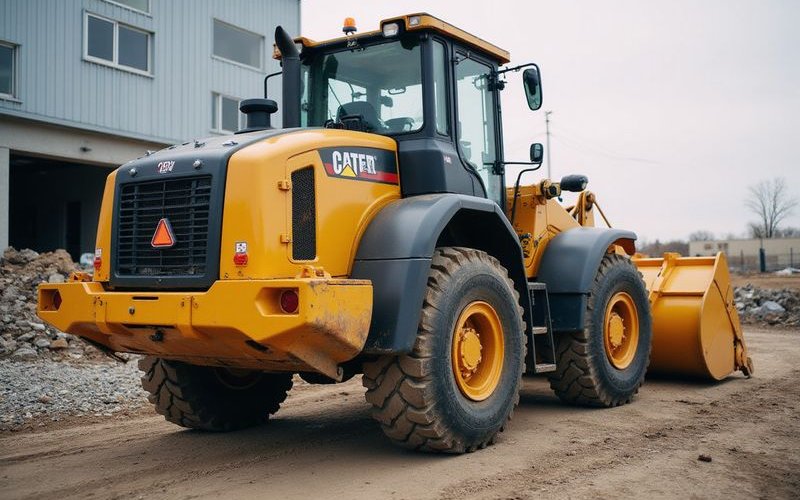
Durability matters here. A commercial pizza oven for a Deep Ellum restaurant or a yellow iron excavator will function perfectly for a decade. Paying it off in five years means you get five subsequent years of profit generation with zero debt service.
2. The Asset Holds Its Resale Value
Certain equipment depreciates very slowly. Top-tier brands like Caterpillar or John Deere maintain strong resale markets in Texas. Ownership gives you the right to sell that asset to recoup capital when you are ready to upgrade.
3. You Want the Section 179 Tax Break
The 2026 tax updates are too significant to ignore. If your business has a strong profit year, using a loan to buy equipment allows you to take that massive Section 179 deduction immediately to lower your taxable income.
4. You Are Not Cash Constrained
Businesses with healthy reserves can afford the 20% down payment. Doing so reduces the amount of interest paid over the life of the loan and lowers the total cost of the asset.
When to Choose an Equipment Lease
Leasing is the strategic choice for agility. We suggest looking at this option if your industry moves faster than your equipment can keep up.
1. Technology Moves Too Fast
IT infrastructure becomes outdated in roughly 36 months. Leasing ensures you are never stuck trying to resell obsolete servers or security systems for pennies on the dollar.
2. You Need to Preserve Working Capital
Cash is oxygen for a growing business. Keeping $50,000 in your bank account for payroll or inventory is often safer than tying it up in a depreciating asset.
3. You Are Bidding on Short-Term Contracts
Construction subcontractors often win jobs that require specific machinery for only 18 months. A lease matches the expense to the revenue of that specific project without a long-term commitment.
4. The “Balance Sheet” Impact (ASC 842 Update)
You should know that the “off-balance sheet” advantage of operating leases has changed. Under ASC 842, private companies must now record leases longer than 12 months on their balance sheet. However, leasing still often improves your debt-to-income ratio compared to a full loan liability.
The Dallas Factor: Local Considerations
Operating in North Texas presents unique challenges and opportunities that national articles often miss.
Dallas County Business Personal Property Tax
If you own your equipment on January 1st, you are liable for Business Personal Property (BPP) taxes. You must file a rendition with the Dallas Central Appraisal District (DCAD) by April 15th.
- The Exemption Benefit: As of 2026, the exemption threshold has increased significantly. HB 9 allows for a $125,000 exemption on income-producing tangible personal property.
- Leasing Nuance: In many lease agreements, the lessor (owner) handles the rendition filing, but they will likely bill you for the tax cost.
The Construction Boom
The ongoing expansion of DFW Airport and the new data center projects in Red Oak have tightened the supply of heavy equipment. Leasing has become a popular way to secure machinery quickly without the long lead times often associated with purchasing new units.
Restaurant Volatility
The restaurant scene in neighborhoods like Bishop Arts is competitive. We often advise new restaurateurs to lease kitchen equipment to minimize upfront risk. If the concept needs to pivot or relocate, you aren’t burdened with selling heavy commercial appliances.

Questions to Ask Yourself
Asking the right questions now can save you thousands later.
- Does this equipment have a useful life beyond the financing term?
- Can I utilize the $125,000 Texas BPP tax exemption if I own this?
- Will the technology be obsolete in three years?
- Do I have the cash reserves for a 20% down payment?
- Is my credit profile strong enough to secure a sub-10% interest rate?
- Does my seasonal cash flow support high fixed payments?
Making the Decision: A Practical Example
Let’s look at a real-world scenario for a landscaping company in Plano looking at a $75,000 commercial mower fleet.
Loan Option (Ownership)
- Terms: 5-year loan at 8% interest.
- Upfront: $15,000 down payment (20%).
- Monthly Payment: ~$1,216.
- Tax Impact: Full $75,000 deduction in Year 1 (Section 179).
- Result: You own the mowers after 5 years and can sell them.
Lease Option (Flexibility)
- Terms: 5-year FMV lease.
- Upfront: $2,300 (First and last month).
- Monthly Payment: ~$1,150.
- Tax Impact: You deduct the monthly payments as operating expenses.
- Result: You return the mowers and upgrade to new models for the next contract.
The loan costs more upfront but builds equity. The lease keeps $12,700 of cash in your pocket today but leaves you with no asset at the end.
The Bottom Line
The right financing choice comes down to your business goals.
- Opt for a loan if you want to build equity, maximize the 2026 Section 179 deduction, and own durable assets like trucks or yellow iron.
- Opt for a lease if you need to protect cash flow, require the latest technology, or want to avoid the administrative burden of asset disposal.
At Equipment Financing Dallas Pros, we offer financing solutions up to $10 million with terms ranging from 1 to 10 years. Our team understands the local Dallas market and can help you structure a deal that supports your growth.
Ready to explore your options? Pre-qualification takes just minutes and doesn’t affect your credit score. With our 90% approval rate for eligible applicants, there’s a good chance we can help you get the equipment you need—whether through a loan or lease.
Related Service
Learn about equipment financing →Related Articles

The Complete Guide to Equipment Financing in Dallas (2026)
Everything Dallas business owners need to know about equipment financing: types, requirements, rates, and how to qualify for the best terms.

Section 179 Tax Deduction: How to Save Big on Equipment Purchases
Learn how Section 179 can help your business deduct the full cost of qualifying equipment. Maximize your tax savings with equipment financing.
Heavy Equipment Financing for Dallas Construction Companies
Financing options for construction equipment in Dallas. Learn about rates, terms, and requirements for excavators, loaders, and more.